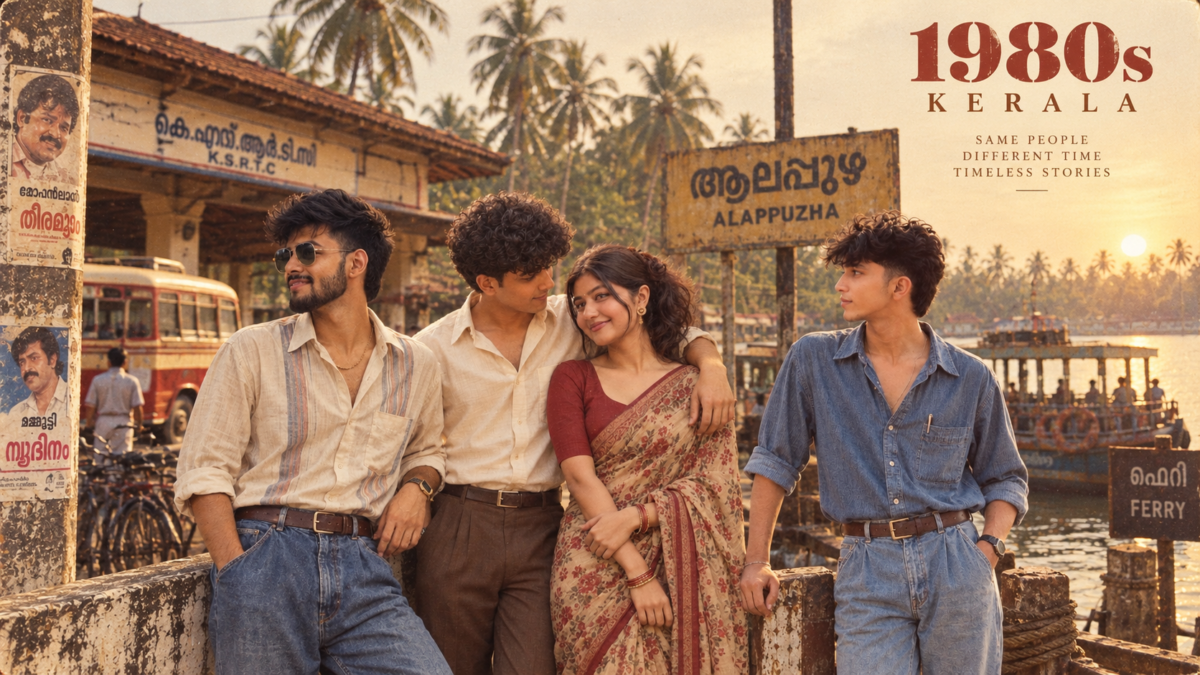
AI photo editing has changed the way people create and share images online. One of the most interesting trends right now is transforming ordinary modern photographs into 1980s Kerala-style retro portraits. Instead of simply adding an old filter, this style recreates the fashion, streets, architecture, vehicles, hairstyles, and atmosphere associated with Kerala several decades ago.
The result can look like a photograph discovered inside an old family album—warm, slightly faded, cinematic, and full of nostalgia.
What Is the 1980s Kerala AI Photo Trend?
The 1980s Kerala AI photo trend uses artificial intelligence to transform a modern portrait into an image inspired by Kerala during the 1980s. The person’s identity can remain recognizable while other elements of the photograph are redesigned.
For example, a modern T-shirt can be replaced with a loose vintage shirt and high-waisted trousers. Contemporary streets can become old bus stands, ferry terminals, railway surroundings, market roads, traditional houses, or small-town Kerala locations.
Details such as coconut trees, weathered walls, bicycles, old buses, hand-painted signs, tiled roofs, and vintage movie posters can make the scene much more convincing.
The important part is that the photograph should actually feel historically inspired, rather than looking like a modern picture with a yellow filter placed over it.
Authentic 1980s Fashion Makes a Big Difference
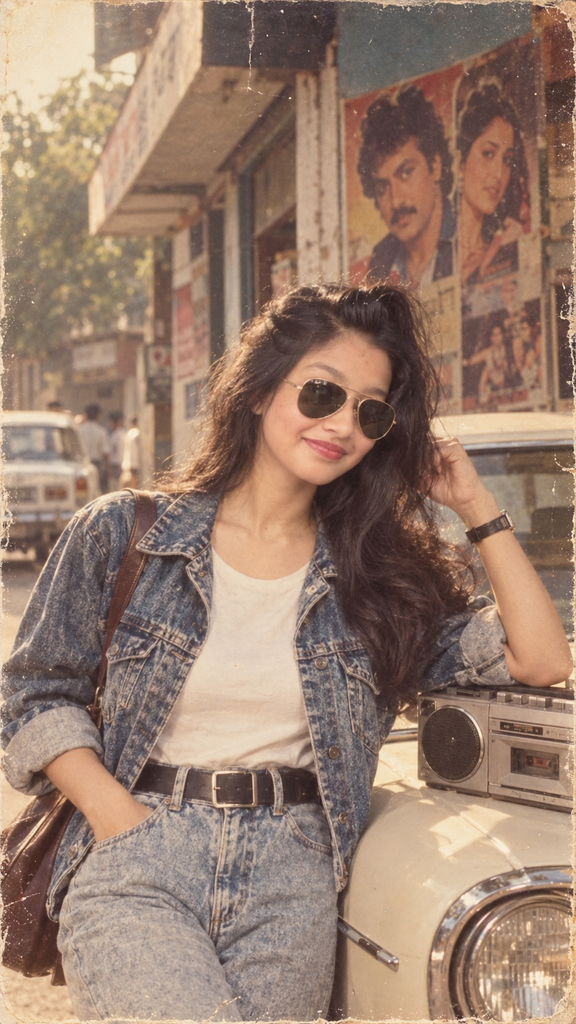
Transform my uploaded photograph into a believable 1980s-inspired portrait while keeping my original identity completely recognizable. Preserve my facial structure, eyes, eyebrows, nose, lips, jawline, complexion, hairstyle, natural skin details, age and body proportions without beautifying or reshaping my face. Style me with authentic 1980s fashion, a voluminous vintage hairstyle, classic accessories and aviator sunglasses. Place me in a realistic period setting containing details such as a vintage automobile, old storefronts, retro posters and a cassette player. Use warm golden illumination, soft contrast, faded vintage colors, realistic depth of field and natural shadows. Add delicate analog film grain, subtle photographic wear, dust and lightly aged edges. Make everything appear naturally photographed on an old film camera, with realistic textures and no digital-looking effects, text or watermark.
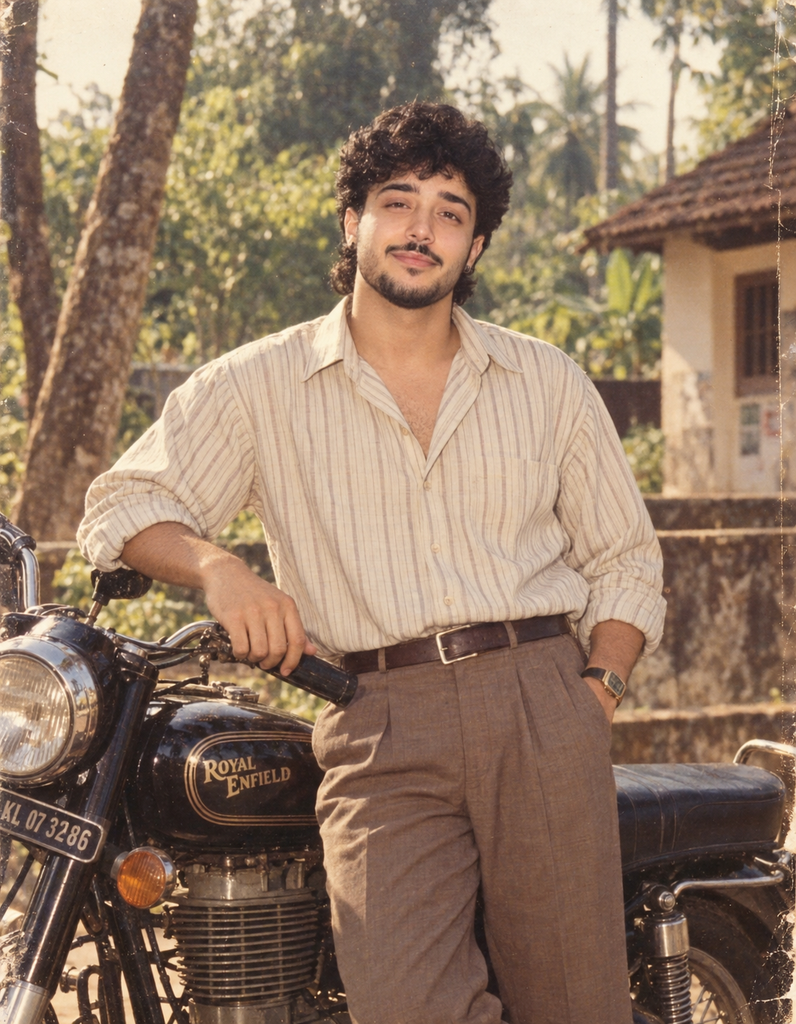
Transform my uploaded photo to recreate the same composition, pose, setting, clothing style, lighting and vintage aesthetic as the reference image. Keep the exact same person/people from my uploaded photo and preserve their facial identity and features. Do not replace or alter their faces. Use the reference only for the scene, styling and photographic look. Create an authentic late-1980s Indian photograph with period hairstyles, fashion, Royal Enfield Bullet, natural greenery, warm sunlight, analog film grain, faded colors and realistic vintage photography. Reference = style/composition; uploaded photo = identity"

Note:-

For an exact result like the photo I shared, take a screenshot of that photo and keep it as the reference image. Then upload the reference image along with your own photo and use the prompt. This will help the Al recreate the same

composition nose setting, styling and vinta Go to source ping your face/identry om your uploaded

photo.
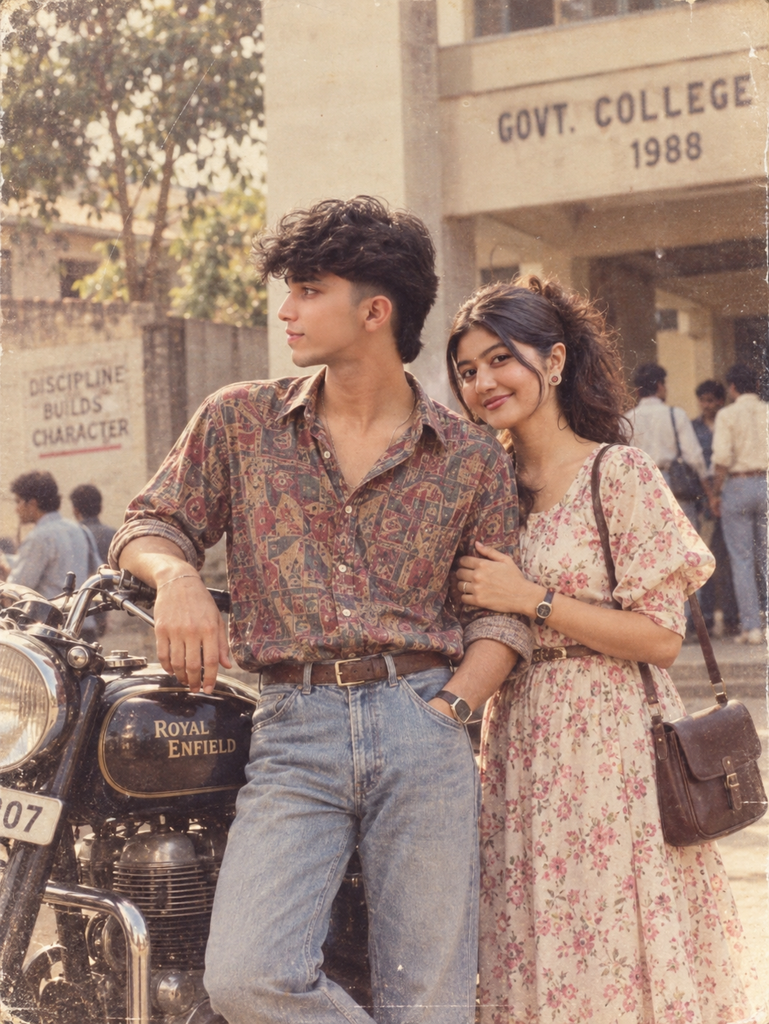
Transform my uploaded photo into an authentic 1980s retro look. Keep my exact face, facial features, skin tone, expression, body shape, and identity completely unchanged. Do not alter, replace, beautify, or distort my face. Add realistic 1980s hairstyle, vintage fashion, classic accessories, warm analog lighting, faded colors, subtle film grain, soft focus, natural shadows, and an authentic old-camera aesthetic. Make the image look like a genuine photograph taken in the 1980s, while preserving my original appearance accurately.
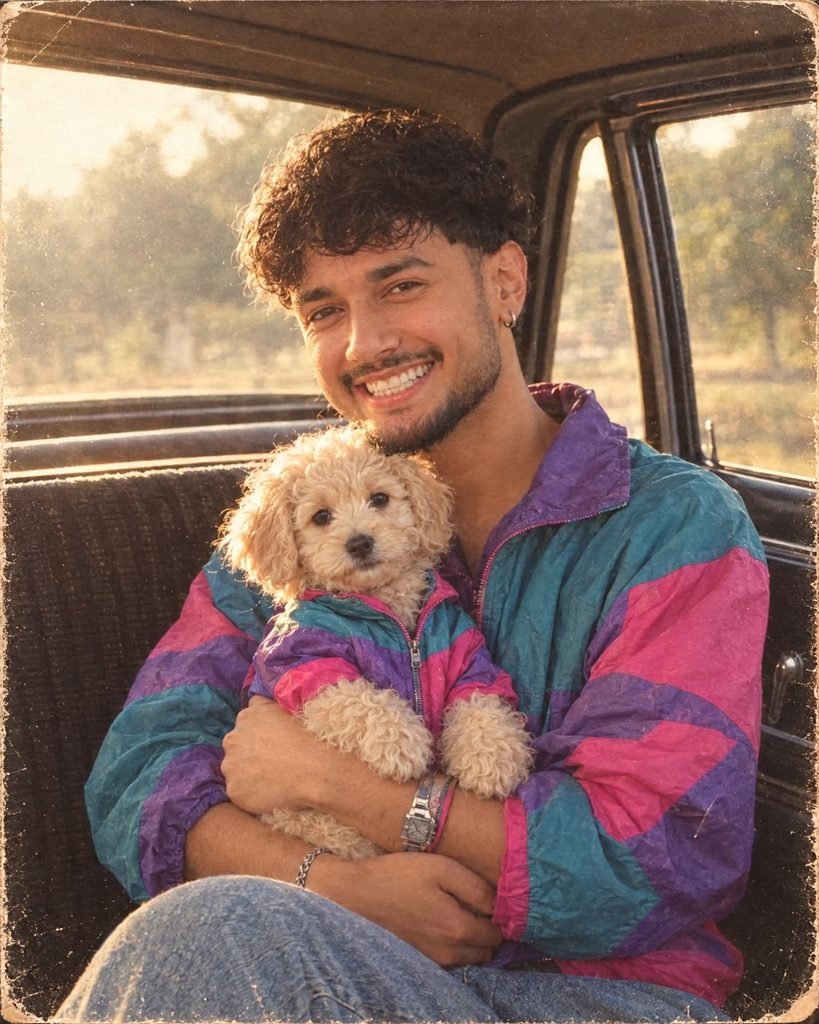
Use the uploaded reference image as the exact visual reference for the subject, composition, mood, and overall aesthetic.
Create a photorealistic nostalgic vintage portrait of a young woman sitting inside an old car, lovingly hugging a small cream-colored curly-haired puppy close to her chest.
SUBJECT:
The woman has long, thick, naturally wavy dark brown hair, partially tied up with a large bright pink scrunchie. Her hair falls naturally around her face and shoulders. She is leaning her head gently toward the puppy and looking directly into the camera with a warm, playful, affectionate smile. Preserve realistic natural skin texture, facial proportions, eyes, nose, lips, and natural imperfections. Do not over-beautify or make the face look artificial.
CLOTHING:
She is wearing a colorful vintage 1980s/1990s-style windbreaker jacket with teal blue, purple, pink, and magenta color-block sections. The jacket has a slightly shiny nylon texture and a visible zipper. She is also wearing light blue denim jeans.
ACCESSORIES:
Large bright pink hoop earrings, multiple colorful plastic bangles/bracelets on her wrist, and a bright pink scrunchie in her hair.
PUPPY:
A small adorable cream/apricot-colored curly-haired puppy with soft fluffy fur, dark expressive eyes, and a small black nose. The puppy is wearing a miniature colorful retro windbreaker matching the woman's jacket. The puppy is sitting comfortably in her arms, facing the camera. The woman gently hugs the puppy with both arms. Their faces are close together, creating a natural affectionate moment.
POSE & COMPOSITION:
Close-up vertical portrait. The woman leans her head toward the puppy while holding it securely in her arms. The puppy is centered in the foreground and the woman's face is slightly above and behind it. Both faces are clearly visible. Natural candid pose, intimate framing, realistic interaction, no stiff posing.
ENVIRONMENT:
Inside an older vintage car. Visible car window frames and interior details around the edges. Through the windows, a softly blurred outdoor landscape is visible with warm sunlight and greenery. The environment should feel authentic and nostalgic rather than modern.
LIGHTING:
Warm golden-hour sunlight entering through the car windows from the side and slightly behind the subjects. Soft natural highlights on the woman's hair and the puppy's fur. Gentle warm glow across the skin. No harsh studio lighting.
PHOTOGRAPHY STYLE:
Authentic vintage 35mm film photography from the late 1980s/early 1990s. Kodak-style warm tones, subtle analog film grain, soft highlight rolloff, slightly faded colors, mild halation, gentle lens softness, natural skin texture, imperfect analog sharpness, subtle dust and film imperfections.
COLOR GRADING:
Warm nostalgic tones with slightly muted colors, creamy highlights, subtle faded blacks, warm beige and golden tones, realistic skin tones. Avoid modern HDR, excessive contrast, excessive saturation, or artificial AI-looking textures.
IMAGE DETAILS:
Photorealistic, candid family-photo feeling, emotionally warm, nostalgic, authentic vintage snapshot, shallow depth of field, realistic bokeh, natural facial expressions, realistic puppy fur, realistic fabric texture.
Add a subtle aged-film border around the edges with light scratches and faded corners, similar to an old photograph that has been kept in a family photo album for decades.
Aspect ratio: 4:5 vertical.
High detail, realistic photography, natural proportions, believable lighting, authentic vintage photograph.
Clothing is one of the most important elements of a convincing retro AI portrait.
For men, vintage styling can include relaxed button-down shirts, tucked shirts, high-waisted trousers, classic denim, leather belts, simple watches, loafers, and period-inspired sunglasses. Shirts with subtle stripes or earthy colors can work especially well.
For women, printed sarees, traditional blouses, simple gold jewellery, bangles, small bindis, and naturally styled hair can create an elegant vintage appearance.
AI prompts should clearly describe the period. Simply asking for “retro clothes” may produce a mixture of different decades. Mentioning authentic 1980s Indian or Kerala fashion gives the image generator much stronger direction.
Hairstyle and Grooming Matter Too
A common mistake in AI-generated retro photos is keeping an obviously modern hairstyle.
Modern fades, extremely sharp beard line-ups, contemporary salon cuts, and heavily styled hair can immediately break the vintage illusion.
Instead, the hairstyle should complement the chosen period. Men can have naturally voluminous, side-parted, wavy, or medium-length hairstyles. Women’s hairstyles can feature soft volume, waves, traditional tied styles, or other period-inspired looks.
The goal isn’t to make the subject look like they are wearing a costume. Everything should appear natural enough that the photograph could plausibly belong to that era.
Recreating Old Kerala Through the Background
The environment is what can turn a good portrait into a memorable one.
Imagine a person standing near an old Kerala bus stand with a red-and-cream bus in the distance. Another photograph could show someone beside an Alappuzha ferry terminal overlooking the water and coconut trees.
A couple portrait might work beautifully on a warm evening street surrounded by old buildings, hand-painted shop boards, weathered walls, bicycles, and vintage cinema posters.
Not every photograph needs an Ambassador car or the same tea shop. Using different environments makes a collection of AI images feel much more authentic.
Possible settings include old ferry jetties, railway stations, market streets, village roads, traditional tiled houses, cinema surroundings, waterfront areas, bus stations, and small commercial streets.
Create the Vintage Film Look
Lighting and color grading are equally important.
A strong 1980s-inspired photograph usually benefits from warm sunlight, slightly muted colors, gentle contrast, natural shadows, and subtle film grain. Small imperfections can actually improve the result because real photographs from that period weren’t digitally perfect.
The image should avoid excessive HDR, artificial skin smoothing, neon lighting, modern cinematic effects, or extremely sharp digital textures.
Instead, prompts can mention 35mm film photography, analog grain, warm color tones, slightly faded prints, natural skin texture, soft highlights, and period photography.
These details help AI reproduce the feeling of an older photograph without destroying facial detail.
Couple Photos Can Look Especially Cinematic
The retro Kerala aesthetic also works beautifully with couple portraits.
A man wearing a cream shirt and high-waisted trousers can stand beside a woman wearing a traditional printed saree. Their expressions and body language should remain relaxed rather than looking heavily posed.
Warm evening sunlight, an old street, vintage buildings, movie posters, and a classic vehicle somewhere in the background can create the atmosphere of an old Indian romantic film.
Natural interaction is important. Small details—such as looking toward each other, casually leaning against a wall, or walking together—often produce a stronger result than dramatic poses.
How to Write a Better AI Prompt
A good prompt should describe more than just the subject. It should specify the person’s identity preservation, clothing, hairstyle, accessories, pose, environment, lighting, camera style, and desired decade.
It is also useful to tell the AI what not to generate. You can exclude smartphones, LED signs, modern cars, contemporary architecture, modern hairstyles, plastic-looking skin, CGI effects, and futuristic objects.
This prevents modern elements from accidentally appearing inside an otherwise convincing vintage scene.
Final Thoughts
The appeal of the 1980s Kerala AI photo trend comes from its combination of technology and nostalgia. With carefully written prompts, a photograph taken today can be transformed into something resembling an image captured decades ago.
The strongest results don’t depend on a vintage filter alone. They combine authentic clothing, period-appropriate hairstyles, Kerala-inspired environments, analog photography characteristics, and natural expressions.
When all these elements work together, the final photograph feels less like an AI effect and more like a forgotten memory from another era.